
HVAC Schools and Technician Training Programs



HVAC schools can help you build the hands-on skills for installing, maintaining, and troubleshooting heating, cooling, ventilation, and refrigeration systems. The real decision is which route fits your budget, schedule, local licensing rules, and need for lab or field experience: a short certificate, a diploma, an associate degree, an apprenticeship, or a hybrid option.
Quick answer: HVAC training can be a strong fit if you want practical mechanical work, electrical troubleshooting, changing job sites, and a trade tied to homes, commercial buildings, refrigeration, and indoor comfort. Before choosing a program, verify lab time, EPA Section 608 preparation, local licensing rules, apprenticeship connections, costs beyond tuition, and whether employers near you value the credential.
On this page
HVAC Training Options
There is not one single HVAC training route. Some people start with a short HVAC certificate or diploma, some complete an associate degree, and others enter through an HVAC apprenticeship or helper role. The best choice depends on your timeline, budget, local licensing rules, apprenticeship access, and how much hands-on support you need before applying for entry-level jobs.
| Path | Typical length | Best for | Watch out for |
|---|---|---|---|
| Certificate or diploma | Often about 6 to 12 months, though some programs are longer | Fast entry-level preparation, hands-on fundamentals, and EPA Section 608 prep | Short programs vary a lot. Ask how much lab time is included and what costs are extra. |
| Associate degree | Usually about 2 years | Students who want broader technical training, general education, and possible advancement flexibility | Longer timeline and higher total cost may not be necessary for every entry-level goal. |
| Apprenticeship | Commonly several years | People who want paid on-the-job training and can compete for sponsored openings | Availability, entry requirements, wages, and classroom hours vary by sponsor and location. |
| Online or hybrid training | Varies by provider and format | Theory, terminology, safety basics, and exam preparation | Online study cannot fully replace hands-on practice with equipment, tools, electrical systems, and refrigerants. |
Trade school vs. apprenticeship: HVAC school can build foundation skills before you apply for work or an apprenticeship. Apprenticeships can provide paid experience, but they are not always easy to land immediately. In some markets, completing a formal HVAC program may help you stand out when applying for helper or apprentice roles.
HVAC Trade Schools
Sponsored Listings


Lincoln Tech
- Heating, Ventilation, and Air Conditioning (HVAC)
Aviation Institute of Maintenance
- Chicago, Illinois
- Heating, Ventilation, and Air Conditioning
Lincoln Tech
- Denver
- East Windsor
- New Britain
- Shelton
- East Point (Atlanta)
- Marietta (Atlanta)
- Melrose Park
- Indianapolis
- Columbia
- Mahwah
- Union
- Lincoln
- Grand Prairie
- Heating, Ventilation, and Air Conditioning (HVAC)

YTI Career Institute
- York, Pennsylvania
- Heating, Air, Conditioning & Refrigeration Technology

Tulsa Welding School
- Atlanta, Georgia
- Jacksonville, Florida
- Tulsa, Oklahoma
- Dallas, Texas
- Houston, Texas
- Refrigeration Technologies


Advanced Technology Institute
- Virginia Beach, Virginia
- HVAC and Refrigeration
- HVAC and Refrigeration with Service Management


San Joaquin Valley College
- Phoenix, Arizona
- Sacramento, California
- Heating, Ventilation, Air Conditioning and Refrigeration

UEI College
- Mesa
- Phoenix
- Bakersfield
- Chula Vista
- Fresno
- Gardena
- Huntington Park
- Oceanside
- Ontario
- Reseda
- Sacramento
- Stockton
- West Covina
- Dallas
- Tacoma
- Heating, Ventilation, and Air Conditioning

United Education Institute
- Morrow, Georgia
- Stone Mountain, Georgia
- Las Vegas, Nevada
- Albuquerque, New Mexico
- Houston, Texas
- Heating, Ventilation, and Air Conditioning


All-State Career School
- Baltimore, Maryland
- Essington, Pennsylvania
- Pittsburgh, Pennsylvania
- Electrical Technology
- Heating, Ventilation, Air Conditioning and Refrigeration
Fortis
- Birmingham
- Dothan
- Mobile
- Montgomery
- Pensacola
- Port St. Lucie
- Atlanta
- Indianapolis
- Baton Rouge
- Lawrenceville
- Wayne
- Centerville
- Cincinnati
- Columbus
- Cuyahoga Falls
- Scranton
- Columbia
- Cookeville
- Nashville
- Houston North
- Houston South
- Salt Lake City
- Richmond
- HVACR

Dorsey College
- Madison Heights, Michigan
- Roseville, Michigan
- Saginaw, Michigan
- Wayne, Michigan
- Woodhaven, Michigan
- HVAC Systems Technician

Porter and Chester Institute
- Bridgeport, Connecticut
- Hamden, Connecticut
- Waterbury, Connecticut
- Brockton, Massachusetts
- Chicopee, Massachusetts
- Worcester, Massachusetts
- HVACR (Heating, Ventilation, Air Conditioning and Refrigeration)

Northbridge University
- DeLand, Florida
- Kissimmee, Florida
- Lakeland, Florida
- Orlando, Florida
- Pembroke Pines, Florida
- South Miami, Florida
- Tampa, Florida
- HVAC/R
- HVAC/R with PLC
San Joaquin Valley College
- Phoenix, Arizona
- Electrical Technology
- Heating, Ventilation, Air Conditioning and Refrigeration

Eastwick College
- Nutley, New Jersey
- Heating, Ventilation, Air Conditioning, and Refrigeration Technology


Southern Technical College
- Auburndale, Florida
- Brandon, Florida
- Orlando, Florida
- Port Charlotte, Florida
- Sanford, Florida
- HVAC

Universal Technical Institute
- Avondale, Arizona
- Long Beach, California
- Rancho Cucamonga, California
- Sacramento, California
- Miramar, Florida
- Orlando, Florida
- Atlanta, Georgia
- Bloomfield, New Jersey
- Mooresville, North Carolina
- Austin, Texas
- Dallas, Texas
- Houston, Texas
- San Antonio, Texas
- HVACR

Automotive Training Centres
- Surrey, British Columbia
- CFC Regulation Air Conditioning
- Ozone Depletion Prevention
How Much Does HVAC School Cost?
HVAC school costs vary widely by location, school type, credential level, delivery format, and what the program includes. A short certificate at a public technical college may cost much less than a private accelerated program, while an apprenticeship may have lower classroom costs but requires a longer time commitment.
| Cost factor | What to verify |
|---|---|
| Tuition and fees | Ask for the full program cost, not just per-term tuition. Confirm whether registration, lab, technology, graduation, or exam fees are separate. |
| Tools and safety gear | HVAC students may need tools, meters, uniforms, boots, safety glasses, gloves, and textbooks. Ask what is included and what you must buy yourself. |
| Certification exams | Ask whether EPA Section 608 exam preparation and testing are included. Voluntary certifications may cost extra. |
| Program length | A shorter program may get you job-ready faster, but a longer program may include more lab practice, broader theory, or general education. |
| Financial aid and funding | Ask whether the program is eligible for federal financial aid, scholarships, military education benefits, payment plans, workforce funding, or employer-sponsored training. |
How Long Is HVAC School?
Many HVAC certificate or diploma programs can be completed in about 6 to 12 months. Associate degree programs often take about 2 years. Apprenticeships commonly take several years because they combine classroom instruction with paid, supervised field experience.
The shortest option is not automatically the best option. A good program should give you enough lab time to practice electrical troubleshooting, refrigerant recovery, brazing or soldering, system charging, airflow testing, and safe tool use before you are expected to perform in the field.
Can You Take HVAC Training Online?
Online HVAC training can be useful for learning theory, vocabulary, safety concepts, blueprint reading, basic electricity, refrigeration cycles, and EPA Section 608 exam topics. It can also be helpful for adults who need a flexible schedule.
Reality check: HVAC is a hands-on trade. Online coursework alone usually cannot replace supervised practice with meters, gauges, electrical circuits, refrigerant recovery equipment, furnaces, heat pumps, condensers, evaporators, and duct systems. If you choose an online or hybrid option, ask how you will get real lab or field experience.
HVAC Certification: EPA 608 vs. Voluntary Credentials
HVAC certification can mean different things, and mixing them up is one of the easiest ways to get bad advice. The biggest distinction is between a federal refrigerant requirement, optional industry certifications, and state or local licensing.
EPA Section 608 Technician Certification
EPA regulations require technicians who maintain, service, repair, or dispose of equipment that could release refrigerants into the atmosphere to be certified. To earn EPA Section 608 Technician Certification, technicians must pass an EPA-approved test administered by an EPA-approved certifying organization.
| EPA type | Applies to |
|---|---|
| Type I | Servicing small appliances. |
| Type II | Servicing or disposing of high- or very-high-pressure appliances, except small appliances and MVACs. |
| Type III | Servicing or disposing of low-pressure appliances. |
| Universal | Servicing all types of equipment covered by Type I, Type II, and Type III. |
EPA Section 608 credentials do not expire, but technicians still need to keep up with current refrigerant rules, equipment changes, and employer requirements.
Other HVAC certifications
Voluntary HVAC certifications from industry organizations can help technicians demonstrate job-specific skills after training or experience. Examples include credentials connected to residential air conditioning, heat pumps, gas heating, air distribution, commercial refrigeration, and employment-readiness testing. These are not the same thing as a state license or EPA Section 608 certification.
HVAC Licensing Rules Vary by State and Local Area
HVAC licensing is not one national system. Some states license individual technicians, some license contractors, some rely heavily on local rules, and some require experience before someone can legally work independently or run an HVAC business.
Before enrolling, ask the school how its program aligns with your state and local licensing path. Also verify the rules yourself through your state licensing board, contractor board, or local building department. A school credential can help you prepare, but it is usually not the same thing as being licensed as an HVAC contractor.
HVAC Technician Salary and Job Outlook
According to the U.S. Bureau of Labor Statistics' May 2025 Occupational Employment and Wage Statistics data, heating, air conditioning, and refrigeration mechanics and installers earned a median annual wage of $61,010, or $29.33 per hour. BLS Occupational Outlook Handbook projections also show employment in this occupation growing 8 percent from 2024 to 2034, with about 40,100 openings projected each year on average over the decade.
Pay varies by region, employer, experience, specialization, union status, overtime, licensing, and whether you work in residential service, commercial systems, refrigeration, controls, or installation. The national number is useful, but local wages matter more when you are comparing schools.
What HVAC Technicians Do
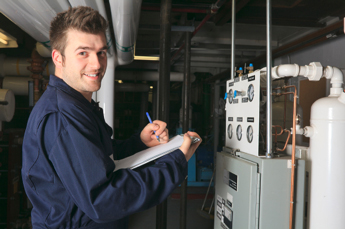 HVAC technicians install, maintain, repair, and troubleshoot systems that control heating, cooling, humidity, ventilation, refrigeration, and indoor air quality. They may work in homes, schools, hospitals, offices, factories, grocery stores, restaurants, and other buildings.
Depending on the job, HVAC technicians may:
- Install, maintain, and repair heating, cooling, ventilation, and refrigeration systems
- Inspect and test HVACR systems and components
- Install electrical components and wiring
- Read blueprints, mechanical drawings, and technical specifications
- Repair or replace worn or defective parts
- Recover, conserve, recycle, or properly handle refrigerants
- Measure airflow, temperature, pressure, superheat, and subcooling
- Braze, solder, cut, and connect tubing or piping where appropriate
- Diagnose system malfunctions and explain repair options to customers
- Keep records of work performed and recommend maintenance
The work can be active and physically demanding. HVAC technicians may work in cramped spaces, outdoors, on rooftops, in hot attics, in cold weather, or on-call during busy seasons. That is not a reason to avoid the trade; it is a reason to know what you are signing up for.
Common HVAC Courses and Skills
Course names vary by school, but HVAC training often covers:
- Heating, ventilation, air conditioning, and refrigeration theory
- Basic electricity and electrical troubleshooting
- Refrigeration cycles and refrigerant handling
- EPA Section 608 exam preparation
- Gas, electric, and oil heating systems
- Heat pumps and air conditioning systems
- Commercial refrigeration basics
- Airflow, ductwork, and indoor air quality
- Piping, brazing, soldering, and leak testing
- Controls, thermostats, sensors, and diagnostic tools
- Safety practices, codes, and customer communication
Questions to Ask HVAC Schools Before You Enroll
A good HVAC program should help you understand exactly what you are paying for and what you will be ready to do after finishing. Ask questions like these before signing anything:
- How much hands-on lab time is included?
- Which tools, books, safety gear, exam fees, and supplies are included in tuition?
- Does the program prepare students for EPA Section 608 certification?
- Is EPA testing included, or do I arrange and pay for it separately?
- Does the program include electrical troubleshooting, refrigeration, heating, heat pumps, and controls?
- Does the school have employer relationships, career services, or apprenticeship connections?
- What percentage of students complete the program?
- What kinds of entry-level HVAC jobs do graduates typically pursue?
- How does the program align with technician or contractor licensing rules in my state or city?
- Can I talk with admissions, financial aid, and an instructor before enrolling?
Common HVAC Training Mistakes to Avoid
- Assuming EPA Section 608 is a state license: It is a federal refrigerant certification, not a blanket permission slip to work independently everywhere.
- Choosing the shortest program without checking lab time: A fast program can be useful, but only if it teaches the skills employers expect.
- Ignoring local licensing rules: Technician, contractor, and local permit rules can vary a lot.
- Picking online-only training without a hands-on plan: Theory helps, but HVAC work is physical and diagnostic.
- Not asking about total cost: Tools, exam fees, uniforms, books, and retesting can change the real price.
HVAC School FAQs
How long is HVAC school?
Many HVAC certificate or diploma programs can be completed in about 6 to 12 months, while associate degree programs often take about 2 years. Apprenticeships commonly take several years because they combine paid on-the-job training with classroom instruction.
What certification do HVAC technicians need?
Technicians who maintain, service, repair, or dispose of equipment that could release refrigerants must earn EPA Section 608 Technician Certification by passing an EPA-approved test. State or local licensing rules are separate and vary by location.
Can I take HVAC training online?
Online HVAC training can help with theory, terminology, safety basics, and EPA Section 608 exam preparation. It usually cannot replace hands-on lab or field experience for tasks such as brazing, electrical troubleshooting, refrigerant recovery, and equipment installation.
Is HVAC school worth it?
HVAC school can be worth considering if you want structured hands-on training, certification preparation, and a faster way to build entry-level skills. The best choice depends on program cost, lab time, local licensing rules, apprenticeship access, and whether employers in your area value formal training.
Do HVAC technicians need a state license?
Licensing rules vary by state and sometimes by city or county. Some locations license individual technicians, some focus on contractors, and some require experience before a person can work independently. Always check your state licensing board, contractor board, or local building department before assuming a school credential is enough.
Featured HVAC Trade School Locations
HVAC licensing, wages, climate demands, and school availability vary by state. Start with the national guide above, then review local details where available:
Sources
- U.S. Bureau of Labor Statistics, Occupational Employment and Wage Statistics: May 2025 national wage tables
- U.S. Bureau of Labor Statistics, Occupational Outlook Handbook: Heating, Air Conditioning, and Refrigeration Mechanics and Installers
- U.S. Environmental Protection Agency: Section 608 Technician Certification Requirements
- O*NET OnLine: Heating, Air Conditioning, and Refrigeration Mechanics and Installers
- ApprenticeshipStandards.org: Heating & Air Conditioning Mechanic & Installer Work Process Schedule